Contact center of the Ukrainian Judiciary 044 207-35-46
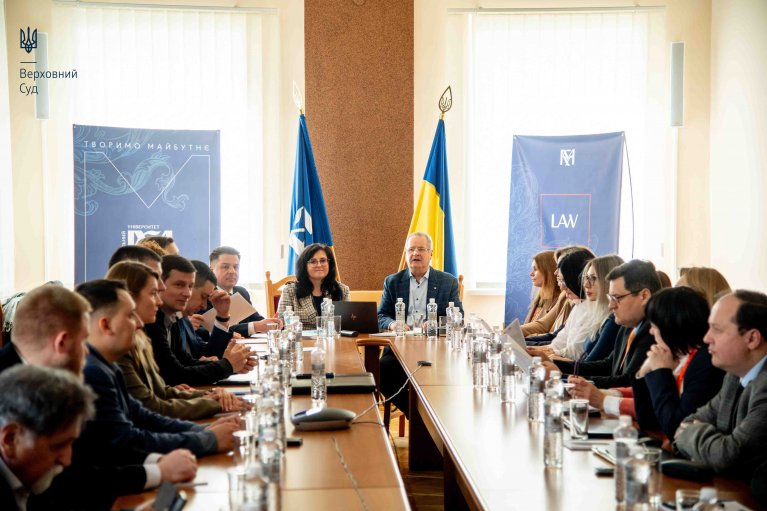
The Radbruch Formula is not merely a museum piece of legal thought, but a living instrument whose relevance is demonstrated by contemporary jurisprudence as well as by the challenges of wartime. This was discussed by judges of the Supreme Court and scholars at the round table “The Radbruch Formula: a Theoretical Construct or a Practical Tool in the Search for Justice”, which took place within the framework of the Science Days of the National University of Kyiv-Mohyla Academy in co-operation with the Supreme Court and with the support of the OSCE Support Programme for Ukraine.
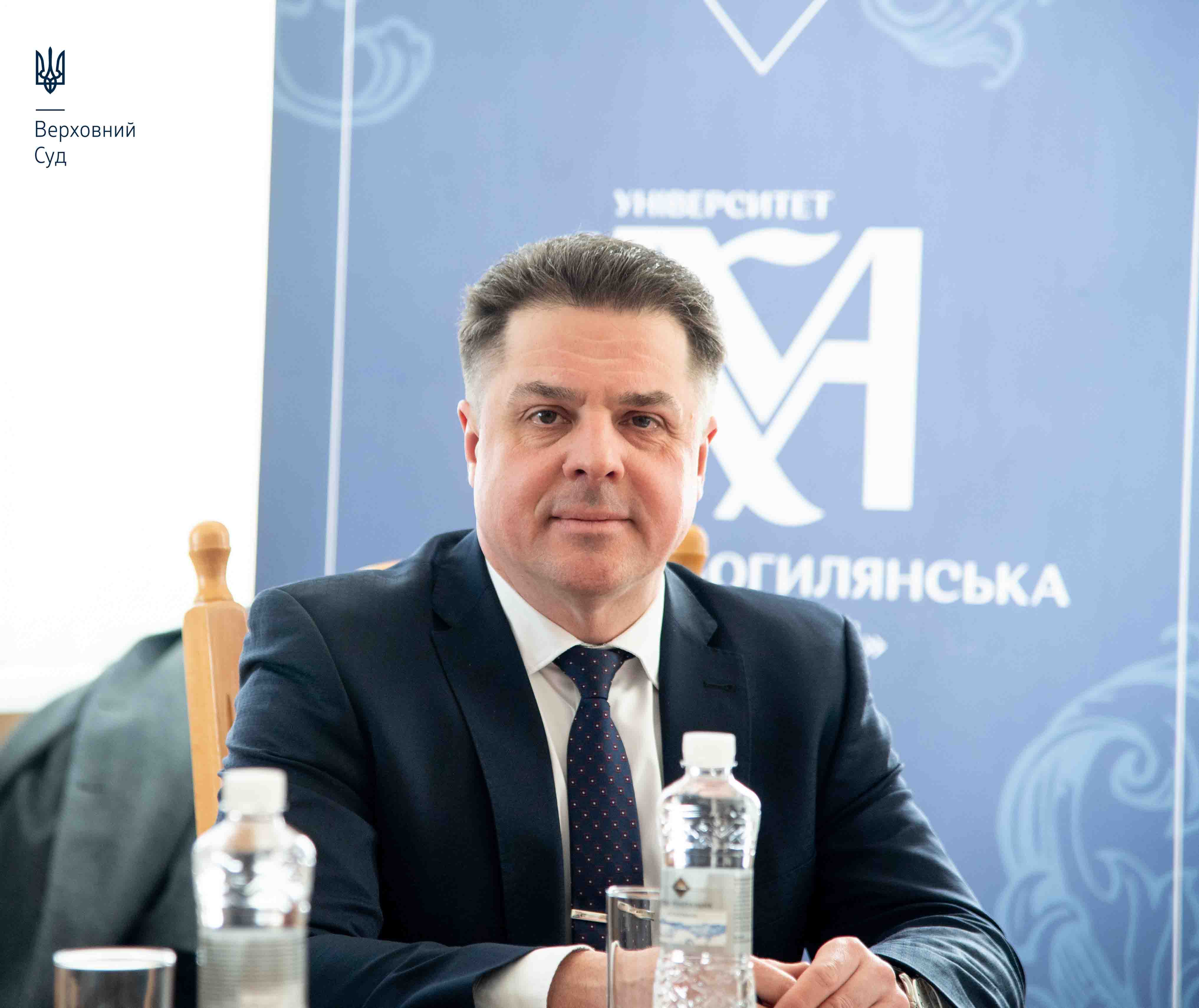
In his welcoming address, the Secretary of the Grand Chamber of the Supreme Court, Doctor of Law, Professor, Corresponding Member of the National Academy of Legal Sciences of Ukraine Serhii Pohribnyi noted: until 1933 the German legal philosopher Gustav Radbruch wrote that a judge is obliged to obey the law, even if it is unjust. Society needs stability. Law must be predictable. And in 1946 he wrote what we today call the Radbruch Formula. It provides that when the conflict between positive law and justice reaches an intolerable degree, the law as “false law” must yield to justice. The question arises: “What is an ‘intolerable degree’ and where does the boundary of intolerability lie?”
The speaker drew attention to the fact that the Grand Chamber of the Supreme Court, in its ruling of 19 February 2026 in case No. 240/7215/24, applied the Radbruch Formula for the first time in its practice: its triad (justice, expediency, legal certainty) was used as a direct instrument for assessing a legislative decision.
In this case the court of first instance upheld a claim for the cancellation of the reduction of the seniority allowance of a civil servant from 50 % to 30 % by the Law of Ukraine “On the State Budget of Ukraine for 2024”. The Grand Chamber of the Supreme Court posed the Radbruchian question. Does the conflict between this law and justice reach an intolerable degree? Is the legislative decision on the redistribution of the components of salary arbitrary or manifestly unjust? And it answered that it does not: the reform has a clear legitimate aim, does not infringe the essence of the employee’s right to remuneration for work, does not deprive a person of the means of subsistence, and does not deny equality as the core of justice.
At the same time Serhii Pohribnyi cautioned that the Radbruch Formula is a weapon. And, like any weapon, it is dangerous in the wrong hands. Gustav Radbruch himself did not want every judge, whenever a law appears unjust to him, simply to refuse to apply it. The Formula is an exception, not the rule, the speaker emphasised. He added that the judges of the Grand Chamber of the Supreme Court are mindful that it is unacceptable for the court to take the place of the legislature.
In conclusion, Serhii Pohribnyi noted that the Radbruch Formula reminds us that law which renounces justice ceases to be law. But justice which renounces law also ceases to be justice.
In his welcoming address, Volodymyr Venher, Dean of the Faculty of Law at National University of Kyiv-Mohyla Academy, PhD in Law, Associate Professor, emphasised that reviving the tradition of academic dialogue, even under the difficult conditions of wartime, is an important step towards the development of legal thought and statehood.
He remarked on the significance of such scholarly events as a space for the formation of new ideas, the critical rethinking of legal reality and the affirmation of state-building approaches. Volodymyr Venher also stressed the relevance of the topic of the round table, noting that the Radbruch Formula requires not only theoretical reflection but also practical implementation in judicial practice.
The participants were also welcomed by the Head of the Department of General Theoretical Jurisprudence and Public Law of the Faculty of Law of NaUKMA, Doctor of Law, Professor, Academician of the National Academy of Legal Sciences of Ukraine Anatolii Zaiets. In addition, he was co-moderator (together with Yuliia Matvieieva, Senior Lecturer of the Department of General Theoretical Jurisprudence and Public Law of the Faculty of Law of NaUKMA, PhD in Law) of the first panel “Criteria for Determining ‘Flagrant Injustice’”, at which he also delivered a presentation entitled “The Place of the Radbruch Formula in Contemporary Philosophical and Legal Doctrine”.
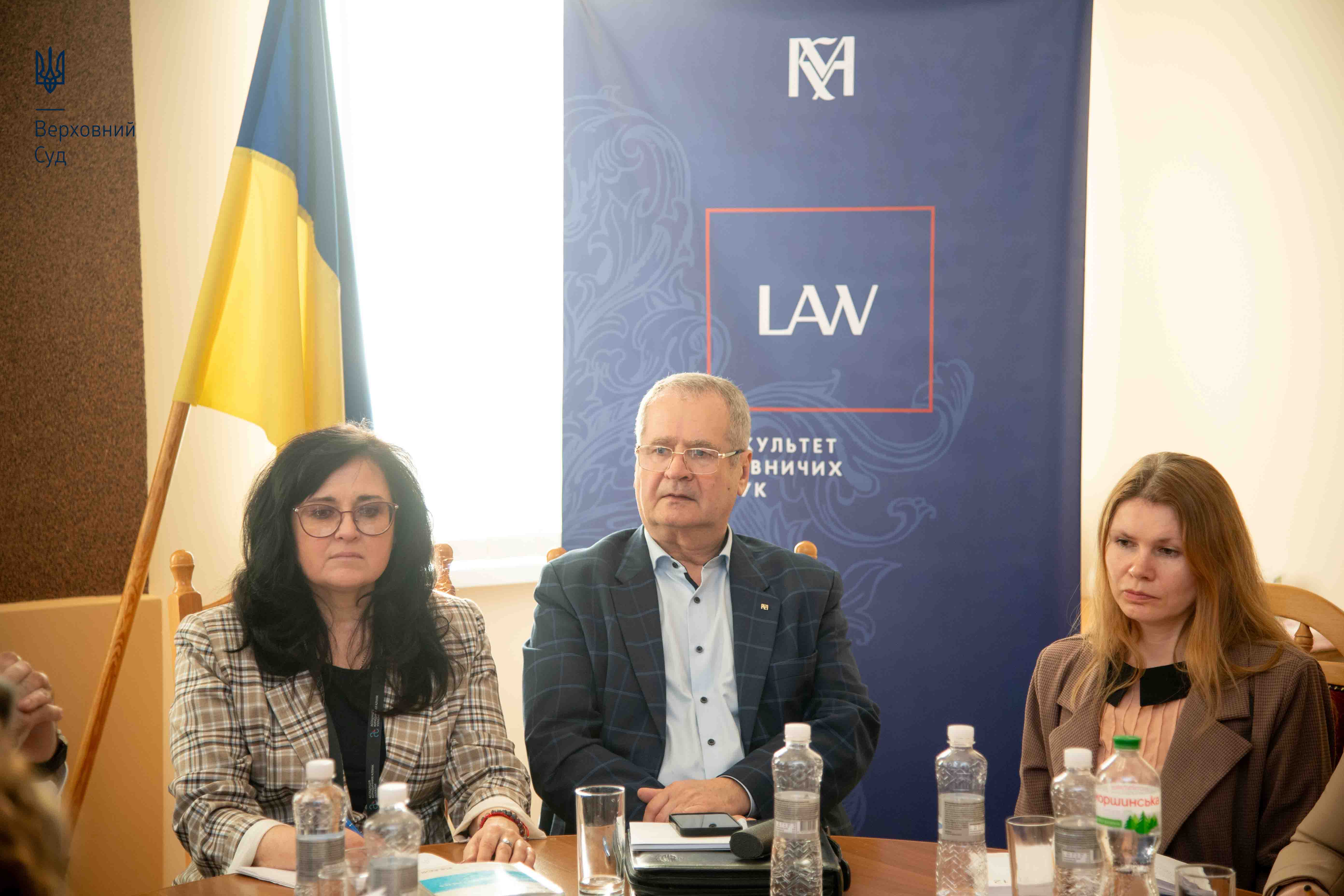
Anatolii Zaiets focused on the historical development of German legal science and the relationship between law and statute. Thus, the doctrine of legal positivism, which prevailed in Germany until 1945, proved powerless in the face of the filling of law with totalitarian and immoral content – racial laws, the Nuremberg persecutions and death sentences became the natural consequence of this vulnerability. It was from this tragedy that the return to the ideas of natural law began, which found expression in the Constitution of Germany.
Gustav Radbruch, in the speaker’s view, was one of the key (though not the only) thinkers of this process. Interestingly, similar ideas were developed by the Ukrainian scholar Stanislav Dnistrianskyi, who believed that a judge must protect not only the norms of the state but also the norms of other social relations, departing from positive law for the sake of higher principles of justice.
The speaker emphasised an important regularity: the more authoritarian the state becomes, the further law and statute diverge. The continental legal system, unlike the British one, was compelled to develop special mechanisms for limiting state power through the concept of natural law.
In conclusion, he noted that contemporary legal trends, in particular the concept of Ronald Dworkin, go beyond narrow positivism, recognising law as an integral system that must be consistent with the moral foundations of the community. Today, society itself is the bearer of rights, and the law must conform to public perceptions of justice.
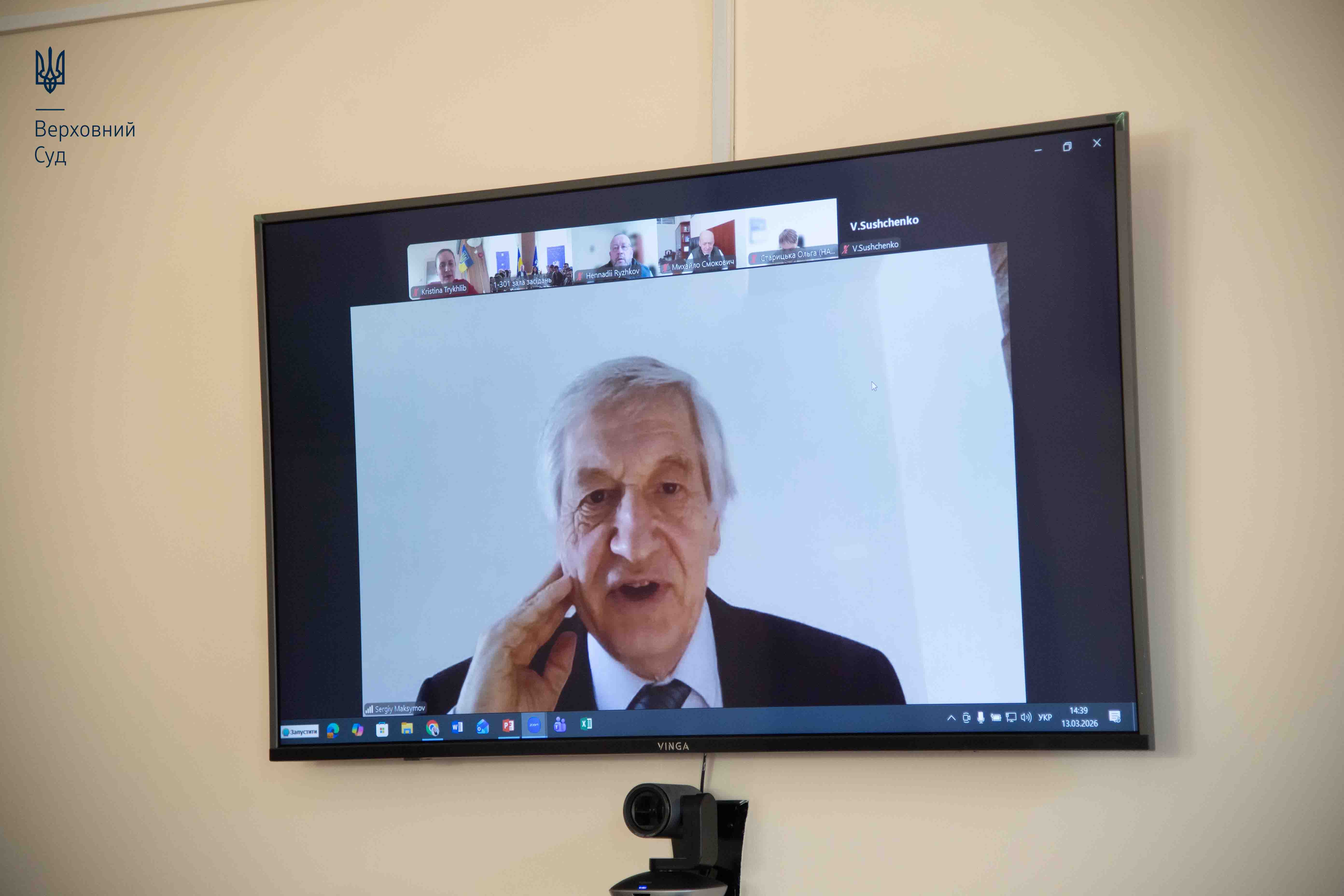
Serhii Maksymov, Professor in the Department of Human Rights and Legal Methodology at the Yaroslav Mudryi National Law University, Doctor of Law, Corresponding Member of the National Academy of Legal Sciences of Ukraine, gave a presentation on ‘The Radbruch Formula: possibilities and limitations of its application’. He elucidated the place of the Formula in contemporary philosophy of law, noting that it became the impetus for non-positivism – a direction later developed by Robert Alexy.
The speaker distinguished two versions of non-positivism: the strong version, according to which any unjust law is not law, and the weak version, initiated precisely by Gustav Radbruch, which is practically realistic (in ordinary situations preference is given to legal certainty, yet in the event of extreme injustice it yields to justice). The Radbruch Formula applies not to any injustice, but only to its highest degree, when a law loses the quality of law and becomes arbitrariness. The criteria for such extreme injustice are the right to life and the right to personal integrity – rights from which the state may not derogate even in emergency situations.
The speaker also raised a pragmatic question: “Can an individual judge withstand an unjust system?” In his view, if a consensus arises among lawyers not to apply extremely unjust laws, a certain effect is possible. However, an official who nevertheless applies a non-legal statute must be aware that a non-legal state is not eternal and that his or her actions will be assessed from the standpoint of liberal-democratic values.
In conclusion the speaker noted that, although the Radbruch Formula is applied indirectly in everyday judicial practice, it sets a value-based orientation to which the entire legal system must align itself.
In her presentation “Vulnerable Issues of the Radbruch Formula”, Yuliia Matvieieva, Senior Lecturer of the Department of General Theoretical Jurisprudence and Public Law of the Faculty of Law of NaUKMA, PhD in Law, focused on the problematic aspects of this Formula and its relationship with contemporary legal instruments.
The first point she emphasised was subjectivism in the understanding of justice. The application of the Formula requires from the judge thorough preparation and proper argumentation, since determining the boundary of “flagrant injustice” in practice is extremely difficult.
Second – the emergence of new instruments for measuring injustice, in particular the principle of the rule of law as interpreted by the Venice Commission and international human rights treaties. In this regard the speaker drew an important distinction: the Radbruch Formula is a reaction to already existing unlawful law, whereas the rule of law in its contemporary understanding is an instrument for preventing injustice in statute.
Third – the dualism in the understanding of law inherent in the Radbruch Formula has theoretical shortcomings. Radbruch’s follower Arthur Kaufmann went further, rejecting the division of law into two blocks and proposing that law be understood as a hybrid phenomenon – a unity of the formal force of statute and justice.
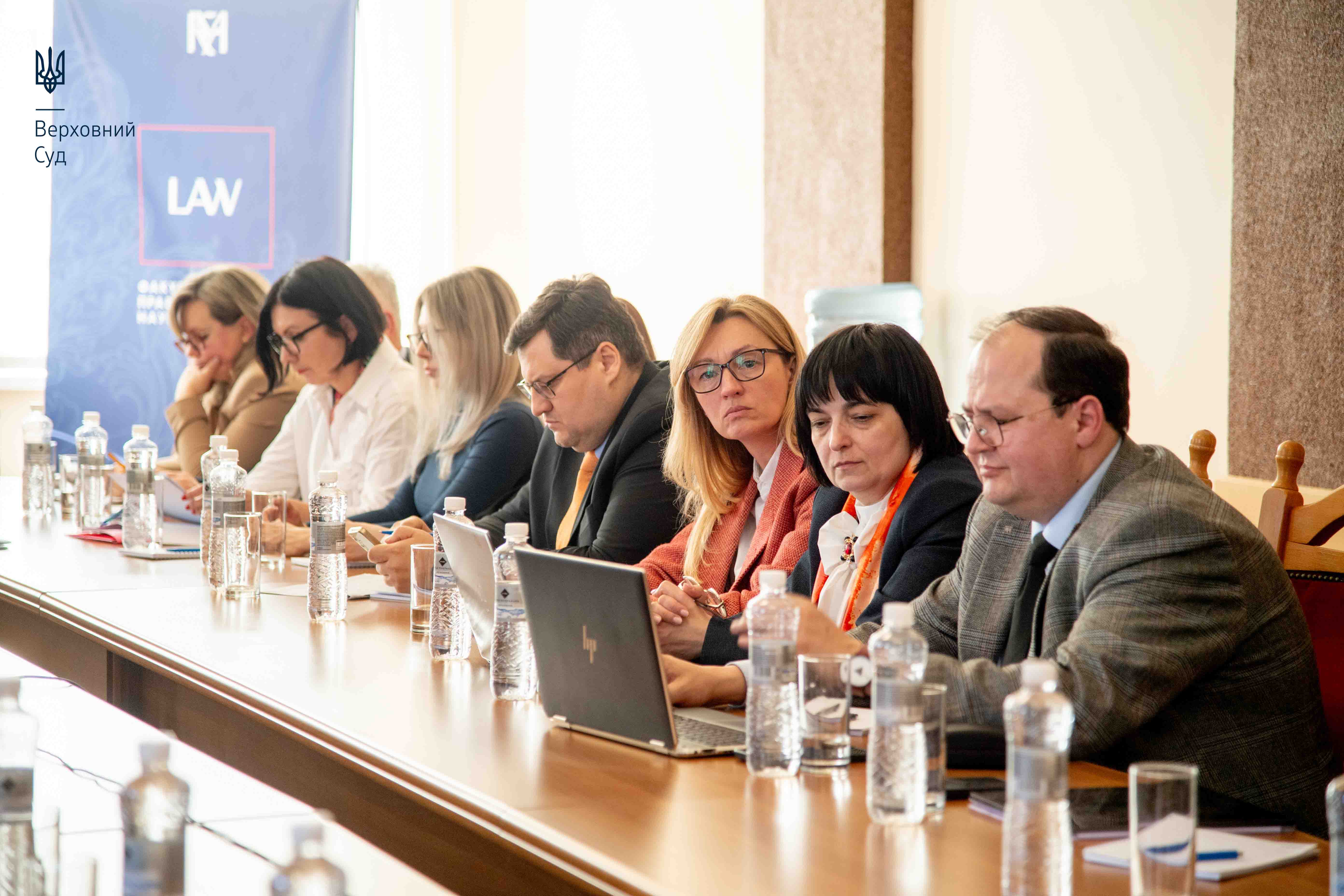
In conclusion the speaker turned to the three-level conception of law, which combines the axiological (values and justice), normative (law as text) and functional (law in action) levels. This conception goes beyond the debate of “positivism or natural law” and regards law as a monolith. Lawyers, she summarised, must find within themselves the courage to combat injustice – not only in theory, but also in practice.
Viktoriia Serediuk, Associate Professor in the Department of Theory and History of Law and the State at the Institute of Law of Taras Shevchenko National University of Kyiv and holder of a PhD in Law, spoke about the philosophical and legal foundations and the contemporary context of Radbruch’s formula.
She emphasised that the Formula cannot be considered in isolation from Radbruch’s idea of law, which encompasses three elements: justice, expediency and legal certainty. Radbruch sought to overcome the gulf between positivism and natural law through the concept of culture, regarding law as a cultural phenomenon with both positive and ideal characteristics. This approach was later developed by Arthur Kaufmann and Robert Alexy.
Regarding the contemporary contexts of the Formula the speaker identified three directions. The first and most acute is the application of the Formula in the conditions of modern totalitarian regimes, in particular with regard to the war crimes of the russian federation against Ukraine: the non-recognition of international law, the masking of violations under the guise of lawfulness, the false interpretation of international norms and the deliberate denial of justice through secret, unpublished decisions on the part of the russian federation. The second is the development of the Formula in contemporary doctrine, primarily in the works of Robert Alexy, who constructed a new theory of law on its basis and proposed an instrument for its application through the “law of competing principles” and the “law of balancing”. The third is the relevance of the Formula in contemporary constitutional democracies, in which courts, without referring to the Formula directly, in fact use its argumentation (for example, the judgments of the European Court of Human Rights in cases concerning the shootings at the Berlin Wall).
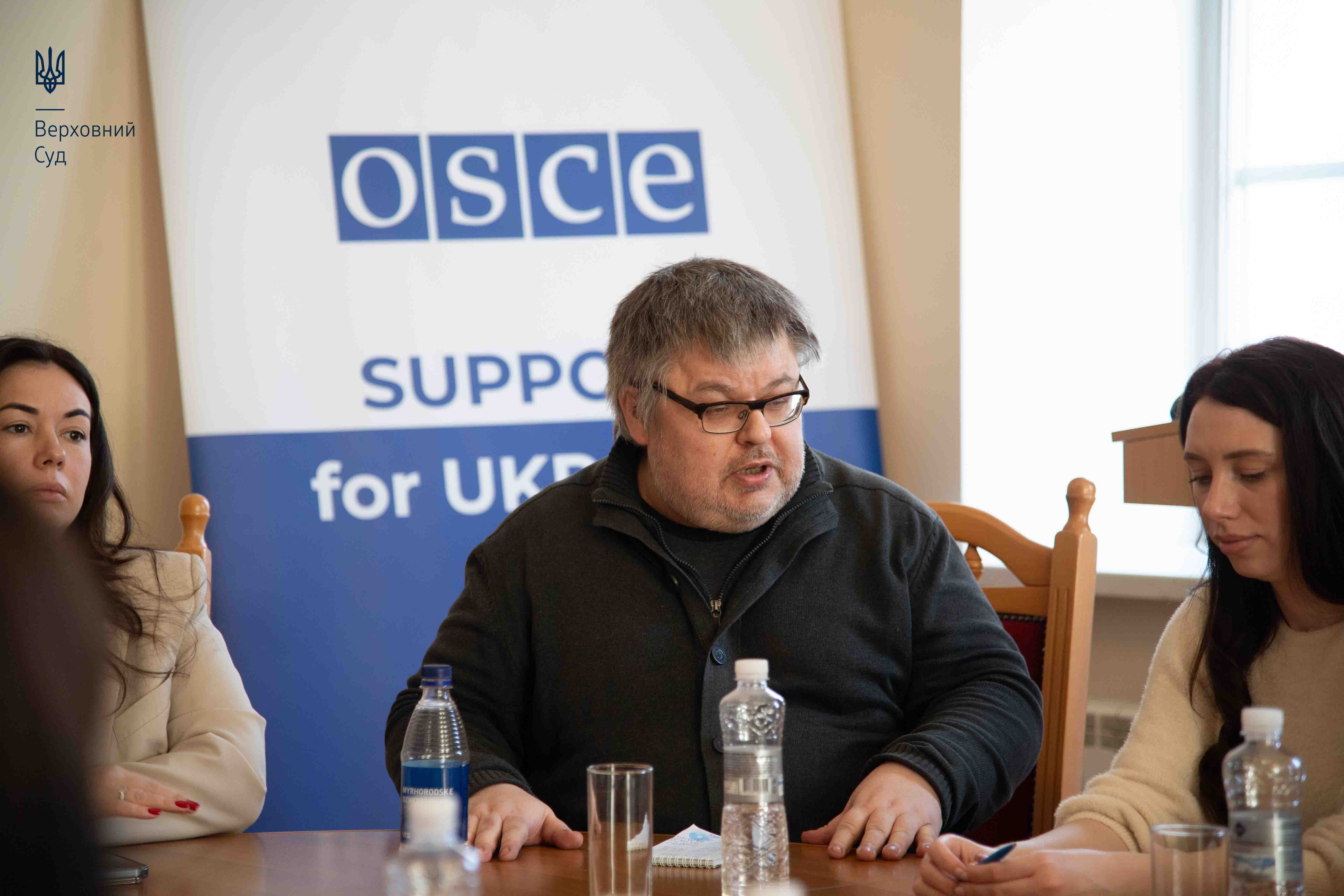
Professor Stanislav Pohrebniak, Head of the Department of Human Rights and Legal Methodology at Yaroslav Mudryi National Law University and Doctor of Law, delivered a presentation entitled ‘Radbruch’s Formula: Contemporary Challenges’. The scholar observed that the Formula was revolutionary for 1946. Today it has somewhat lost the sharpness it possessed at the moment of its writing, yet it has not lost its relevance – and the discussion surrounding it remains important.
The speaker drew a parallel between the Radbruch Formula and the standard of proof “beyond reasonable doubt”. Just as in criminal procedure a simple majority of 51 to 49 is insufficient (conviction must reach 90–95 %), so too “intolerable injustice” in the sense of the Radbruch Formula cannot be a matter of a slight majority. It must be an obvious violation of justice that 9 out of 10 persons would recognise. In other words, the threshold for the application of the Radbruch Formula is deliberately high and requires almost unanimous obviousness – similar to the standard of “beyond reasonable doubt” in criminal proceedings.
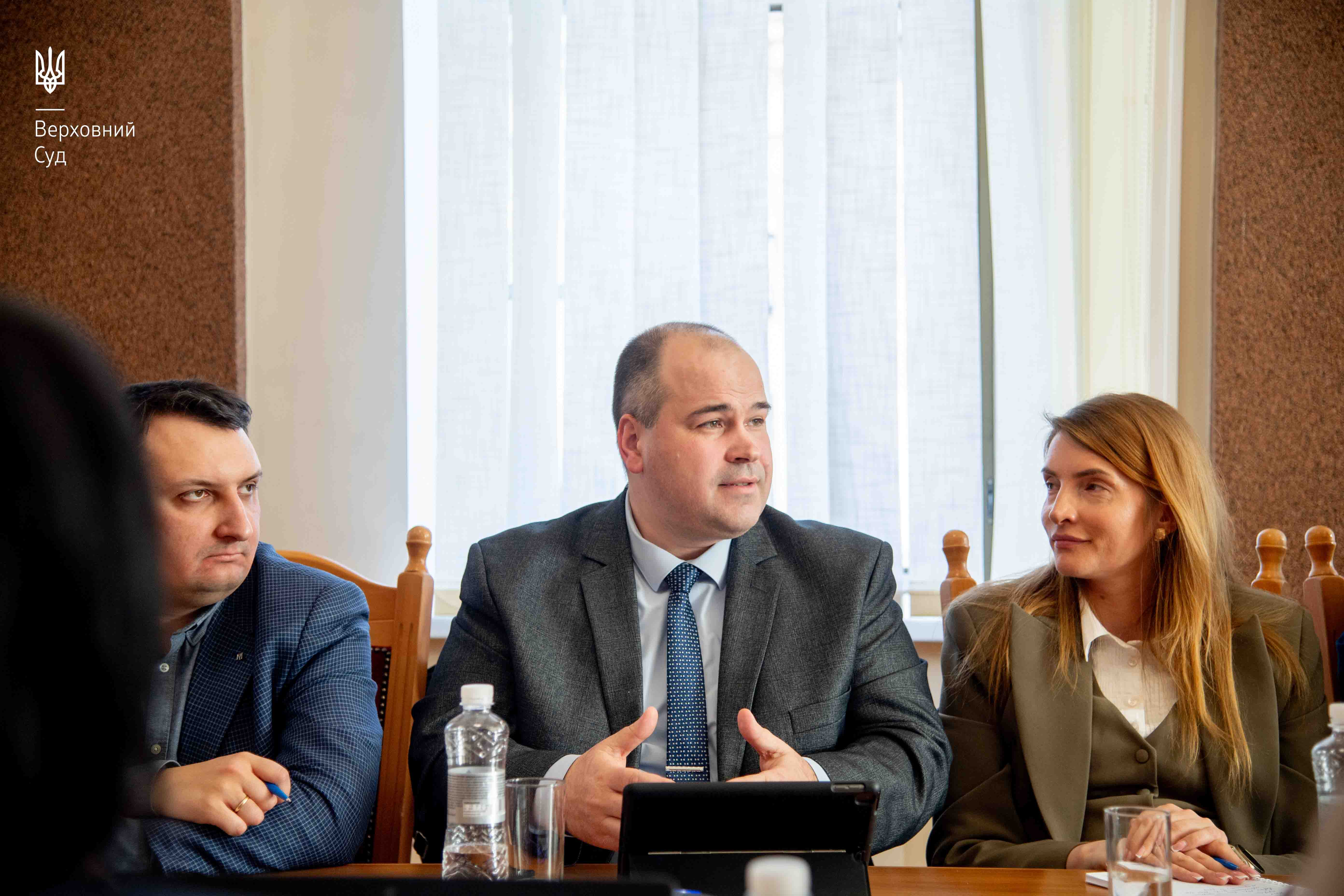
Mykola Mazur, Judge of the Grand Chamber of the Supreme Court, PhD in Law, Associate Professor, delivered a speech on the topic ‘Law and justice on the scales of justice: when the principle of the rule of law requires the court to follow the letter of the law, and when to depart from it’.
The speaker noted that the question of the relationship between justice and statute has concerned philosophers for centuries. However, after the Second World War it became evident that laws can be not merely unjust, but the embodiment of absolute evil. At the same time, although Gustav Radbruch criticised positivism, he recognised that there are two other values – justice and expediency. Moreover, statute itself can be an element of justice, since it ensures legal certainty.
The judge noted that recognising “flagrant injustice” appears to be a straightforward task in theory. Yet in practice, history has repeatedly shown that people often commit evil either because they are unable to recognise this “flagrant injustice”, or because they deliberately ignore it, or simply disregard it. Today we are witnessing similar acts by the Russian invaders.
The principle born of the experience of the Nuremberg trials, and Radbruch’s formula, are once again gaining relevance, particularly in the question of the retrospective application of Article 442-1 of the Criminal Code of Ukraine to crimes against humanity committed before October 2024.
Nevertheless, as Mykola Mazur has observed, in the modern European legal tradition the question of the relationship between the letter of the law and the principle of the rule of law arises in a much broader context, which goes beyond Radbruch’s “flagrant injustice” and is grounded in the need for the effective protection of human rights. This is vividly illustrated by the first judgment in which the ECtHR attached decisive importance to the principle of the rule of law in interpreting the Convention for the Protection of Human Rights and Fundamental Freedoms, enabling it to go beyond the literal meaning of Article 6 of the Convention and to declare that the right of access to a court is guaranteed by that Article, even though it is not expressly mentioned therein (Golder v. the United Kingdom, 1975).
The speaker pointed out that in some cases the ECtHR refers to excessive formalism, while in others it speaks of a violation of rights arising from non-compliance with a provision of the law. This poses a difficult question for judges: “When, in a particular case, should one be guided by the letter of the law, and when is it necessary to depart from it in order not to breach the principle of the rule of law?”
Drawing on his own judicial experience, Mykola Mazur noted that he had decided the majority of cases strictly within the bounds of the law or established case law, since legality and legal certainty are key elements of the rule of law. There had, however, also been instances in which blind adherence to the letter of the law could have led to a violation of human rights or to a manifestly unjust outcome, requiring a clear distinction to be drawn between the letter of the law and the principle of the rule of law, which differs from it.
In any event, resolving the question of the relationship between the law and the rule of law in practice always requires the judge to weigh the arguments for and against following the letter of the law with great care.
Kristina Trykhlib, Associate Professor of the Department of Theory and History of Law at Yaroslav Mudryi National Law University, PhD in Law, and MSCA4Ukraine Fellow at the Centre for Interdisciplinary Constitutional Studies of the Jagiellonian University, addressed the topic “Justice versus Legality: the Limits of Discretionary Power and the Effective Protection of Human Rights”.
She focused on the methodological foundations for applying Radbruch’s formula in judicial practice and recalled that justice prevails over positive law only when the conflict between statute and justice reaches an intolerable degree.
Kristina Trykhlib devoted attention to the tools that help avoid judicial arbitrariness in the application of the formula. In particular, she examined Robert Alexy’s weight formula, referred to the proportionality test and the doctrine of the margin of appreciation from the case law of the ECtHR. She further emphasised that legality and justice should not be set in opposition to one another; rather, they should exist as a unity of form and substance.
The search for the boundary between the formal application of the law and the attainment of a just result remains one of the key challenges for the courts in present-day conditions. This was stressed by Vitalii Urkevych, Judge of the Grand Chamber of the Supreme Court, Doctor of Law, Professor and Corresponding Member of the National Academy of Legal Sciences of Ukraine in his presentation “The Rule of Law versus Formalism in the Case Law of the Grand Chamber of the Supreme Court”. He observed that the disputes that come before the Supreme Court predominantly require a complex balancing of the legal norm, its interpretation and the concrete circumstances of life.
Among the examples cited was a case concerning the mandatory stay of proceedings involving a serviceperson. In that case the Grand Chamber of the Supreme Court formulated an approach whereby the court must ascertain the will of such a person (the claimant or a third party with independent claims regarding the subject-matter of the dispute) as to the continuation of the proceedings. Where a corresponding expression of will is present, the proceedings are not subject to automatic stay, thereby making it possible to avoid excessive formalism and to ensure the effective protection of rights.
In another case concerning the payment of compensation to a co-owner where it is impossible to allocate a share in kind, the Grand Chamber of the Supreme Court, despite the formal compliance of the claims with the provisions of civil legislation, took into account Article 8 of the Convention for the Protection of Human Rights and Fundamental Freedoms and concluded that the enforcement of such a judgment could result in persons with disabilities losing their only home. Preference was accordingly given to the protection of the right to housing as the more weighty interest.
The speaker also addressed the approach to identifying the proper defendant in disputes concerning unauthorised construction. The Grand Chamber of the Supreme Court held that the obligation to demolish such an object must be imposed on the person who is its current owner, since it is that person who has a legal interest in the case and a real opportunity to defend his or her rights while holding the procedural status of defendant.
Summarising the examples given, the judge observed that in every case the Supreme Court seeks a balance between formalism and the rule of law in order to achieve a just resolution of the dispute. At the same time he drew attention to the absence of universal criteria for assessing “intolerable injustice” in civil and commercial disputes. In his view, the question of the permissible limits of departure from the literal interpretation of the law depends to a considerable extent on the judge’s inner conviction, formed on the basis of professional experience and taking into account all the circumstances of the case.
Ilona Kaminska, Associate Professor of the Department of Financial Investigations and Economic Security at the State Tax University, PhD in Law and advocate delivered a paper entitled “Justice for "All" but Not for Everyone: How High-Profile Cases Create Public Demand for Injustice Against Judges”.
She drew attention to a dangerous tendency: societal demand increasingly dictates that the courts ignore procedural safeguards in favour of a popular punishment. Under this logic, procedure loses its significance once society is already convinced of a person’s guilt. The problem arises with particular acuteness when the persons concerned are judges themselves: media campaigns create the image of a guilty person even before any proceedings have been concluded.
Ilona Kaminska emphasised that the rule of law exists precisely when even a person whom society has already pronounced guilty is guaranteed the right to a fair trial. By allowing exceptions to this rule, society destroys the very foundation of the rule-of-law state. Justice cannot be selective; it must extend to everyone who falls under the jurisdiction of the Ukrainian legal order, irrespective of office or the public resonance of the case.
The second panel, “Justice in Judicial Practice”, was moderated by Rasim Babanly, Acting Head of the Administration of the Supreme Court and Doctor of Law. He noted that, although there are efforts to develop universal approaches to the concept of justice, its application and manifestation vary across different areas of law. There is therefore no panacea or single solution that can be applied in every case. At the same time, courts cannot disregard the underlying spirit of justice when interpreting and applying the law.
The moderator observed that even within the legal profession there is no clear-cut answer as to whether the administration of justice is synonymous with justice itself. He also noted that perceptions of what is just are often subjective. Nevertheless, cases of manifest injustice may provide an important point of reference for courts, prompting them to look beyond the purely formal application of statutory provisions when seeking an appropriate resolution.
Against this background, Rasim Babanly raised a number of questions for discussion, including:
The substance of the concept of justice was explored by Oleksii Tseliev, Associate Professor at the Department of General Theoretical Jurisprudence and Public Law, Faculty of Law, National University of Kyiv-Mohyla Academy, PhD in Law. He noted that, despite the concept of justice being widely used in legal discourse, it has no universally accepted definition. One way of approaching the concept, however, is through the notion of injustice.
The speaker highlighted the uneven manner in which the principle of justice is reflected in legislation. In the Constitution of Ukraine, the principle is referred to only to a limited extent; in tax law, it is associated with the equitable distribution of the tax burden; while in civil law it is invoked more extensively, alongside the principles of reasonableness and good faith. He also noted the evolution of the legislature’s approach, including the move away from expressly defining “unfair terms” in consumer protection law towards the concepts of nullity and an imbalance between the parties. At the same time, judicial practice demonstrates a continuing commitment to the idea of justice, including through the reduction of excessive penalties where a manifest imbalance is present.
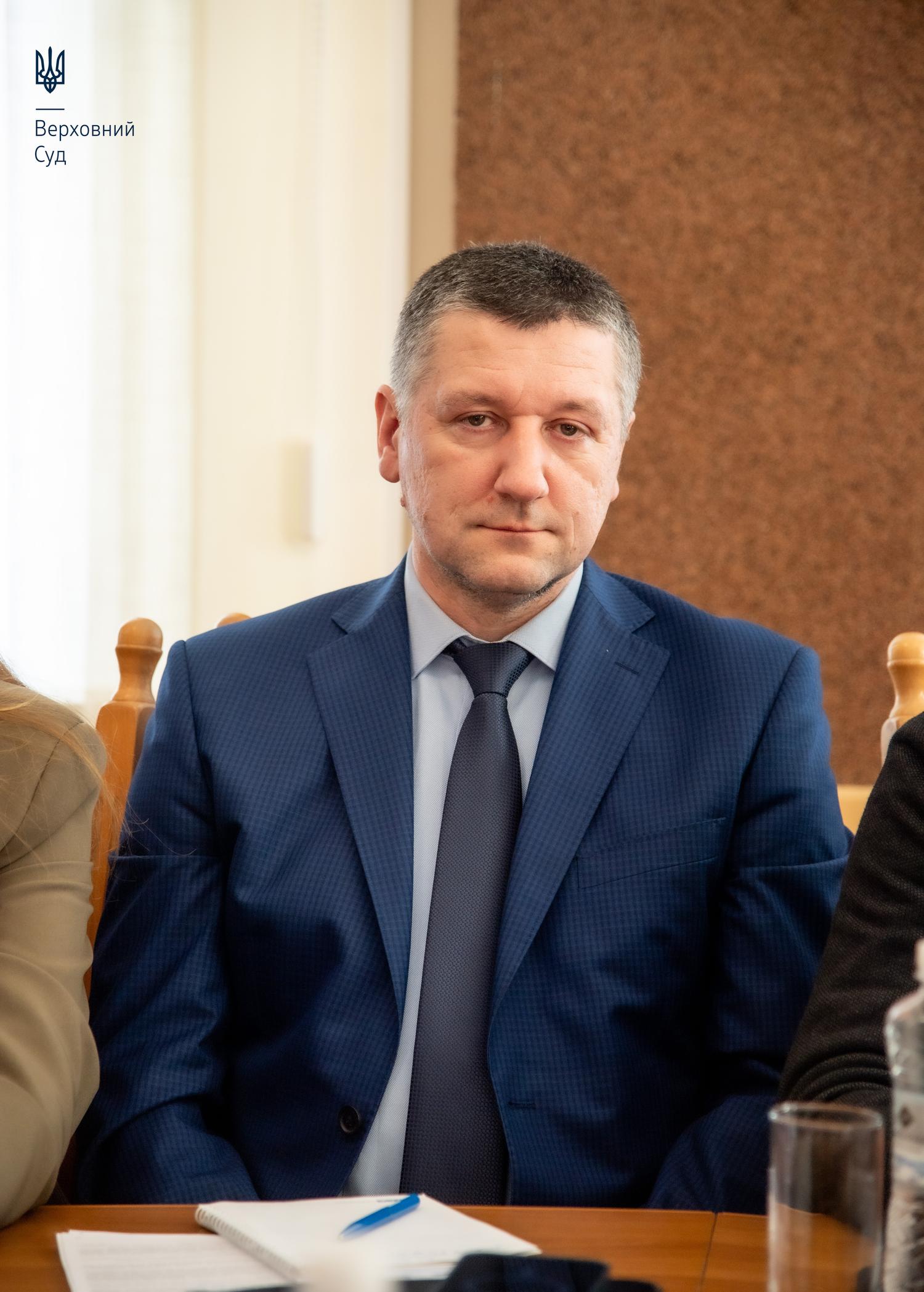
Semen Stetsenko, Judge of the Supreme Court in the Administrative Cassation Court, Doctor of Law, Professor and Academician of the National Academy of Legal Sciences of Ukraine, noted that courts should be prepared to depart from the application of the law where a provision is not merely unjust, but “intolerably unjust”, while at the same time seeking to preserve a proper balance with the principle of legal certainty.
The speaker outlined the key qualities required of a judge applying the Radbruch Formula: a thorough understanding of the circumstances of the case and the legal framework governing the disputed relationship; the psychological readiness to make decisions by applying the Radbruch Formula; and an understanding of the limits of judicial power within the system of checks and balances. In his view, the concept of an “intolerably unjust” law is inherently evaluative and lacks clearly defined criteria, meaning that it can be invoked only in exceptional circumstances.
The speaker also addressed the relationship between this concept and the application of the provisions of the Constitution of Ukraine as directly applicable norms. He referred to a case concerning a claimant’s attempt to initiate the calling of elections during martial law, in which the court found no grounds for departing from the applicable legislative framework. In conclusion, he noted that the Radbruch Formula is an important safeguard against the application of manifestly unjust laws, while its further development requires both practical consideration in judicial decision-making and appropriate attention in legal education.
Mykhailo Savchyn, Director of the Research Institute of Comparative Law and International Law at Uzhhorod National University, Doctor of Law and Professor, emphasised that justice in law is achieved by balancing human dignity, liberty and equality. It is the role of the court to identify that balance in each individual case. He noted that there is no universal model of justice; rather, its substance is determined by the individual’s ability to exercise their rights. In complex cases, courts should look beyond the formal application of legal rules and weigh the interests at stake.
The speaker also highlighted the importance of observing the principles of adversarial proceedings, equality of arms and the presumption of innocence in criminal proceedings. At the same time, where legislation contains gaps or conflicting provisions, a court cannot decline to administer justice; instead, it must adopt a constitutionally conforming interpretation of the relevant rules. He also emphasised the role of constitutional review, noting that even where a law is formally constitutional, the manner in which it is applied may result in violations of human rights and therefore requires appropriate judicial scrutiny.
Albert Yezerov, Judge of the Supreme Court in the Administrative Cassation Court, PhD in Law and Associate Professor, highlighted the continuing relevance of the Radbruch Formula to the protection of social rights. According to him, the concept is closely linked to the restoration of social justice and may serve as a means of addressing situations in which the formal application of the law produces manifestly unjust outcomes.
The speaker recalled that Gustav Radbruch developed his doctrine in response to his experience of living under different political regimes — from Imperial Germany and the Weimar Republic to the Third Reich and, following the fall of Nazism, the emergence of democracy.
According to Albert Yezerov, in modern legal systems this idea has evolved into a range of more sophisticated legal safeguards and doctrines, including:
- the application of the rule of law and the direct applicability of constitutional provisions;
- the case law of the European Court of Human Rights;
- the concept of the quality of law;
- a move away from excessive formalism in the interpretation and application of the law.
He also noted that the Radbruch Formula can be illustrated through examples from Ukrainian judicial practice. In one such case, a court of appeal relied directly on Article 46 of the Constitution of Ukraine, declining to apply a government regulation that provided for a pension below the statutory subsistence minimum.
The judge also referred to a decision of the Constitutional Court of Ukraine concerning the pension rights of those involved in the clean-up of the Chornobyl nuclear disaster. The Court declared unconstitutional a restriction under which the relevant pension entitlement was available only to servicemen who had been performing compulsory military service at the time of the clean-up operation. The decision effectively extended entitlement to pension benefits to hundreds of thousands of people.
Following the Constitutional Court’s ruling, the legal position was further developed in a judgment of the Supreme Court in a model administrative case considered by the Administrative Cassation Court of the Supreme Court and subsequently by the Grand Chamber of the Supreme Court.
The Supreme Court applied the Constitutional Court’s reasoning and confirmed that a broader category of people involved in the Chornobyl clean-up operation was entitled to disability pensions. The judgment became an important point of reference for subsequent judicial practice.
In the speaker’s view, the Radbruch Formula provides judges with a means of declining to apply legal provisions where their application would result in a grave violation of fundamental human rights, including the right to life and the right to human dignity.
"As Radbruch emphasised, a judge cannot invoke a law, or judicial practice based on that law, where its application would result in manifest injustice. In such circumstances, recourse should instead be had to human rights that stand above positive law — inherent rights that have existed since time immemorial and cannot be extinguished even by the coercive commands of a tyrannical regime. Significantly, these ideas were articulated long before the adoption of the Universal Declaration of Human Rights and other international instruments that underpin the contemporary international legal order," the speaker noted.
Denys Azarov, First Vice President of the National University of Kyiv-Mohyla Academy, PhD in Law and Associate Professor at the Department of Criminal and Criminal Procedural Law, Faculty of Law, National University of Kyiv-Mohyla Academy, drew attention to a different problem: situations in which there appears to be no conflict between the law and the underlying principles of justice, yet the outcome of a judicial decision still seems profoundly unjust. In his view, it is precisely in such cases that a court’s ability to deliver justice is truly put to the test.
The speaker presented the findings of an analysis of judicial practice in cases involving drink-driving offences resulting in fatalities. “The analysis revealed significant disparities in sentencing. In cases with broadly comparable circumstances, courts imposed sentences ranging from several years’ imprisonment to substantially longer terms. There are also cases that raise serious questions about the fairness of the outcome — for example, where a defendant is fined following a fatal road traffic accident,” Denys Azarov said.
In his view, a well-reasoned judgment is a fundamental prerequisite for a fair judicial decision: “I may not know precisely what criteria determine whether a decision is fair, but I do know what a fair decision cannot exist without — sound and well-developed reasoning”.
The discussion then turned to the impartiality of the court and the vulnerability of participants in judicial proceedings. Liliia Oliinyk, a lawyer and Managing Partner at LiRox L.A., Law Firm, addressed the potential application of the Radbruch Formula in the context of securing a fair trial.
The speaker recalled that Gustav Radbruch understood justice in terms of treating like cases alike and unlike cases differently. In her view, this approach is particularly relevant where the parties to proceedings are, in reality, in an unequal position.
In her presentation, Liliia Oliinyk examined the vulnerability of participants in judicial proceedings and its implications for the principle of fairness. In particular, she referred to victims of sexual violence, for whom participation in court proceedings is often accompanied by fear, psychological trauma and a sense of dependence. For this reason, she argued, courts must look beyond the legal framework of a case and take account of the individual’s actual circumstances.
“Procedural rules that are formally identical can produce substantive inequality,” the speaker explained, stressing that judicial impartiality does not mean disregarding objective disparities between the parties.
The law cannot justify an unjust outcome simply because that outcome is formally consistent with the law. “Justice cannot be reduced to formal legality alone,” she emphasised. Accordingly, she argued, judicial proceedings require not only strict adherence to procedural rules, but also professional sensitivity and the courage to prevent situations in which the mechanical application of a legal provision deprives a person of a genuine opportunity to receive a fair hearing.
The participants also discussed the relationship between law and morality, the role of courts in addressing unjust legal rules, and the historical experience of applying the Radbruch Formula, particularly in the aftermath of the collapse of totalitarian regimes.
The speakers emphasised that justice remains a fundamental value of the law. The pursuit of justice, they noted, should serve as a guiding principle for the work of legal professionals.
The round-table discussion was also attended by Yehor Krasnov, Judge of the Supreme Court in the Commercial Cassation Court; Arkadii Bushchenko, Judge of the Supreme Court in the Criminal Cassation Court; and Viktor Prorok, Judge of the Supreme Court in the Civil Cassation Court.