Contact center of the Ukrainian Judiciary 044 207-35-46
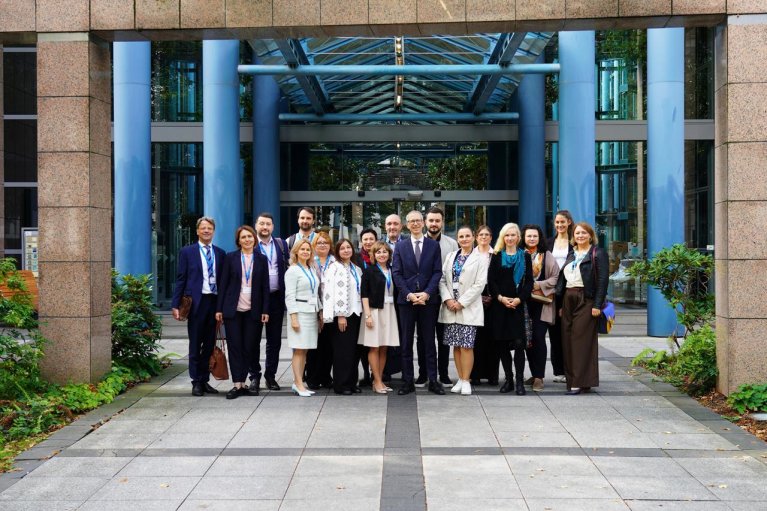
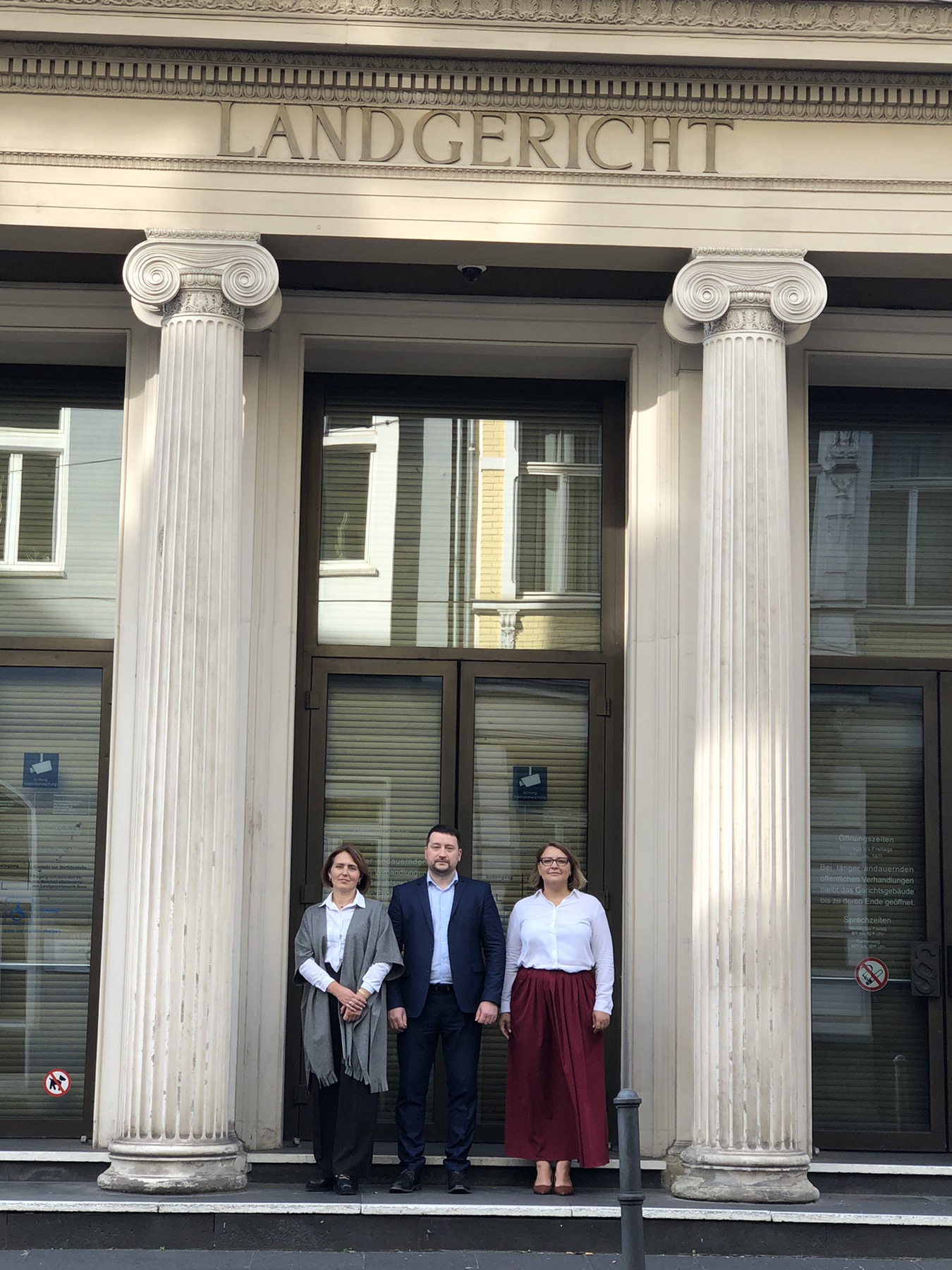
Supreme Court Judge of the Civil Cassation Court Yuliia Cherniak and Hennadii Zelenov, Deputy Head of the Department for Analytical and Legal Work of the Supreme Court Administration, took part in a working visit to the Federal Office of Justice and the Bonn Regional Court (Germany) to exchange experience in the field of international judicial cooperation.
The delegation included representatives of the judiciary, the Ministry of Justice of Ukraine and the Office of the Prosecutor General. The purpose of the visit was to exchange experience with German counterparts in the field of international judicial cooperation in order to ensure more effective implementation and application of the relevant legal instruments.
As part of the visit to the Bonn Regional Court, the participants held a professional discussion on the practice of international judicial cooperation in the European Union from a judicial perspective.
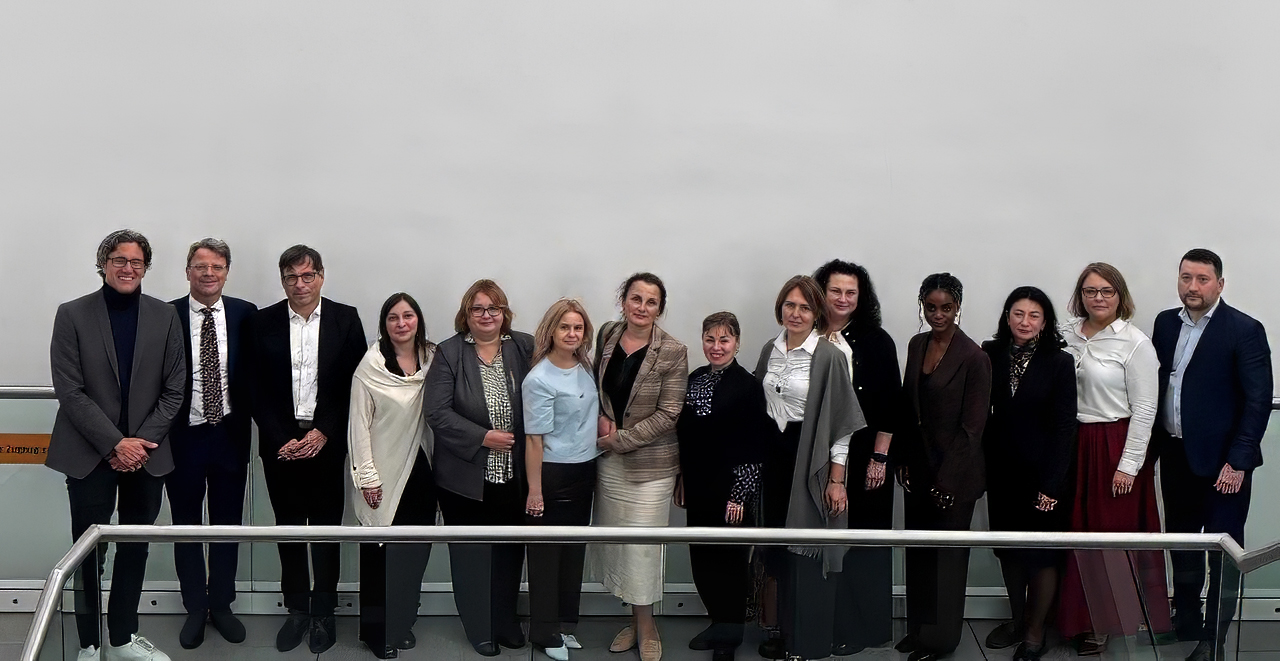
Using specific civil cases involving several jurisdictions as examples, German judges and Supreme Court Judge of the Civil Cassation Court Yuliia Cherniak discussed how, under international conventions to which Ukraine is a party and EU regulations, procedural issues arising in the consideration of such cases are resolved, including:
As Yuliia Cherniak noted, particularly valuable for the Ukrainian judicial system is the experience of using the European Judicial Atlas in civil matters available through the European e-Justice Portal, as well as the experience of judges of the Bonn Regional Court in the European Law Expert Forum. This is a newly established network of judges from different levels of jurisdiction in North Rhine-Westphalia that promotes professional exchange of experience, targeted support and stronger application of European law in judicial practice. The network comprises around 30 judges, including three judges of the Bonn Regional Court.
German colleagues noted that the establishment of such a forum in Germany was prompted by the positive experience accumulated in other EU Member States (for example, the Netherlands) in working with court coordinators for EU legislation. These coordinators have successfully established themselves as a link between judges, European law specialists, and national and European institutions. Since EU law is complex and therefore not always within the day-to-day focus of every judge, Forum members are ready to provide judges of all jurisdictions and instances with support on European law in an accessible, specific and collegial manner.
Yuliia Cherniak also took part in discussions at the Federal Office of Justice on:
Particular emphasis during the professional discussions was placed on the importance and practical significance of cross-border communication between judges. This includes exchanging information on the circumstances of the child concerned by the dispute, ongoing court proceedings concerning the child’s custody and protective measures taken when the child’s place of residence changes, as well as communication when jurisdiction is transferred to a court of another Member State and where parallel proceedings are pending in different countries.
Hennadii Zelenov took part in discussions with German judges concerning criminal justice. Using specific criminal proceedings involving several jurisdictions within the EU as examples, the participants discussed issues relating to determining the jurisdiction competent to hear the relevant criminal proceedings, the service of documents in other countries, the issuance of European Arrest Warrants, the designation of contact authorities in other EU countries for matters concerning European Arrest Warrants, the exchange of information with other EU countries, and the gathering of evidence in criminal proceedings of this kind.
During the discussions at the Federal Office of Justice, Hennadii Zelenov took part in discussions on:
Hennadii Zelenov noted that the enforcement of fines imposed in administrative offence proceedings, as well as fines imposed as criminal penalties, presents significant difficulties or may be impossible altogether if the person concerned has left the country. The legal mechanism established by Council Framework Decision 2005/214/JHA of 24 February 2005 on the application of the principle of mutual recognition to financial penalties addresses these issues and should be adopted by other countries. The Deputy Head of the Department for Analytical and Legal Work of the Supreme Court Administration also emphasised the importance of the “e-Evidence” system, given the widespread preparation for and commission of criminal offences using the internet, particularly at a time when the existing procedure for providing mutual legal assistance can be highly time-consuming.
The event was organised by the German Foundation for International Legal Cooperation (IRZ Foundation) in cooperation with the Ministry of Justice of Ukraine.
