Contact center of the Ukrainian Judiciary 044 207-35-46
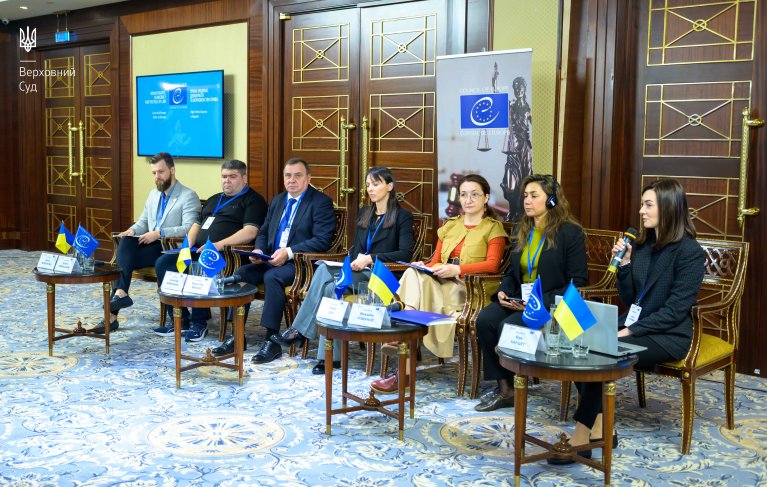
A difficult war, unleashed by Russia against Ukraine, continues. The national legal system is operating at the limits of its capabilities. Nevertheless, we are once again raising the issue of ensuring respect for human rights when applying preventive measures, primarily the detention of a person in custody, because the right to liberty (after the right to life) is a fundamental human right. And if this right is to be restricted, it is essential to take into account the principle of the presumption of innocence, as provided for by the Constitution of Ukraine, by national legislation in general, and by the case law of the European Court of Human Rights.
This was emphasised by the President of the Supreme Court, Stanislav Kravchenko, at the round table “Application of remand measures and reducing overcrowding in pre-trial detention centres during wartime: human rights standards and national practice”, dedicated to the problems of overcrowding in pre-trial detention centres and ways of ensuring human rights during imprisonment, including by overcoming the practice of excessive imposition of such a severe preventive measure as detention in custody.
The President of the Supreme Court expressed his gratitude to the Council of Europe project “Fostering Human Rights in the Criminal Justice System in Ukraine – Phase II” and to the Kharkiv Human Rights Protection Group for organising the round table.
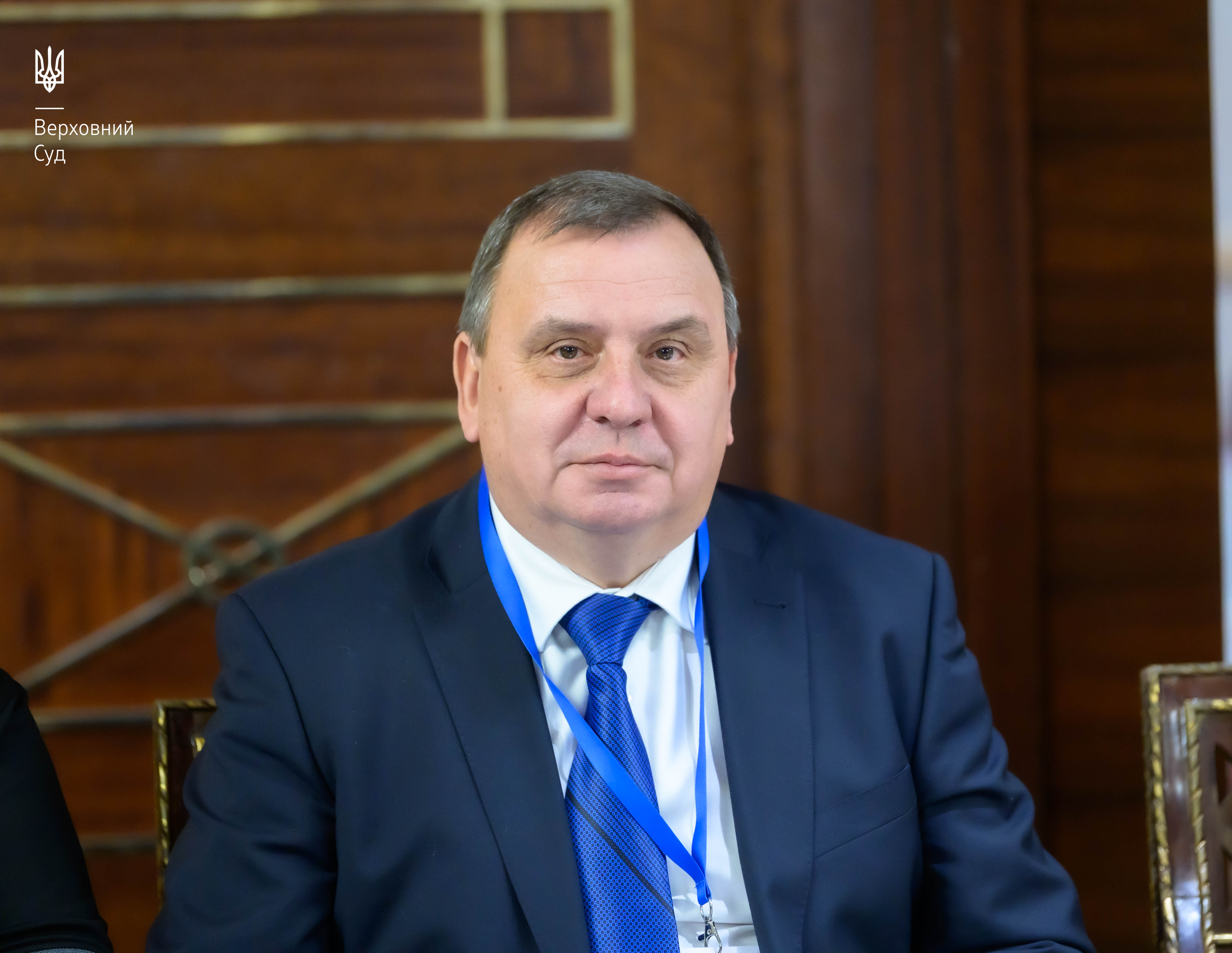
As Stanislav Kravchenko noted, the European Court of Human Rights’ finding of violations by Ukraine of Article 5 of the Convention for the Protection of Human Rights and Fundamental Freedoms, primarily in the context of the lack of justification for imposing and extending detention in custody, remains a systemic problem. Therefore, the Supreme Court and the Council of Europe are jointly conducting research into the practice of national courts in applying preventive measures. The practical recommendations prepared on the basis of this research are intended to form a clear vision of how, at the national level, to overcome this systemic problem linked to non-compliance with the right to liberty and security of person through unlawful deprivation of liberty.
After the adoption of the new Criminal Procedure Code of Ukraine in 2012, a trend towards a significant reduction in the number of cases in which detention in custody was imposed as a preventive measure was observed. For example, Stanislav Kravchenko noted, in 2013 detention in custody accounted for only about one third of all applications for the imposition of preventive measures. Subsequently, however, the percentage of applications for detention in custody that were granted began to rise again, while the share of milder preventive measures applied decreased substantially.
The President of the Supreme Court also recalled the recent decisions of the Constitutional Court of Ukraine, which emphasised the need to observe constitutional guarantees of the right to liberty and security of person, including the provision of proper judicial oversight when applying such a preventive measure as detention in custody.
Thus, the Constitutional Court of Ukraine held unconstitutional the provisions of criminal procedural legislation that allowed the extension of detention in custody in cases where it was impossible to hold a preparatory court hearing (part 5 of Article 615 of the Criminal Procedure Code of Ukraine) and that, during martial law, prescribed the exclusive application of detention in custody for a certain category of military personnel (part 8 of Article 176 of the Criminal Procedure Code of Ukraine).
The President of the Supreme Court noted that one of the key steps in overcoming the problem of the excessive imposition of detention in custody is to foster in society, particularly in wartime conditions, an understanding of the difference between punishment and a preventive measure.
Judges of the Supreme Court in the Criminal Cassation Court, Yurii Luhanskyi and Nataliia Marchuk, also took part in the round table.
